
KOI & GARDEN POND FILTRATION
Pond Filtration System for Koi & Garden Ponds
A practical pond filtration system combines solids removal, biological treatment and water-circulation planning to support clearer water and more manageable routine maintenance.
Pursun helps pond owners, pond builders and dealers compare automatic drum filtration options around pond volume, target flow and installation conditions.
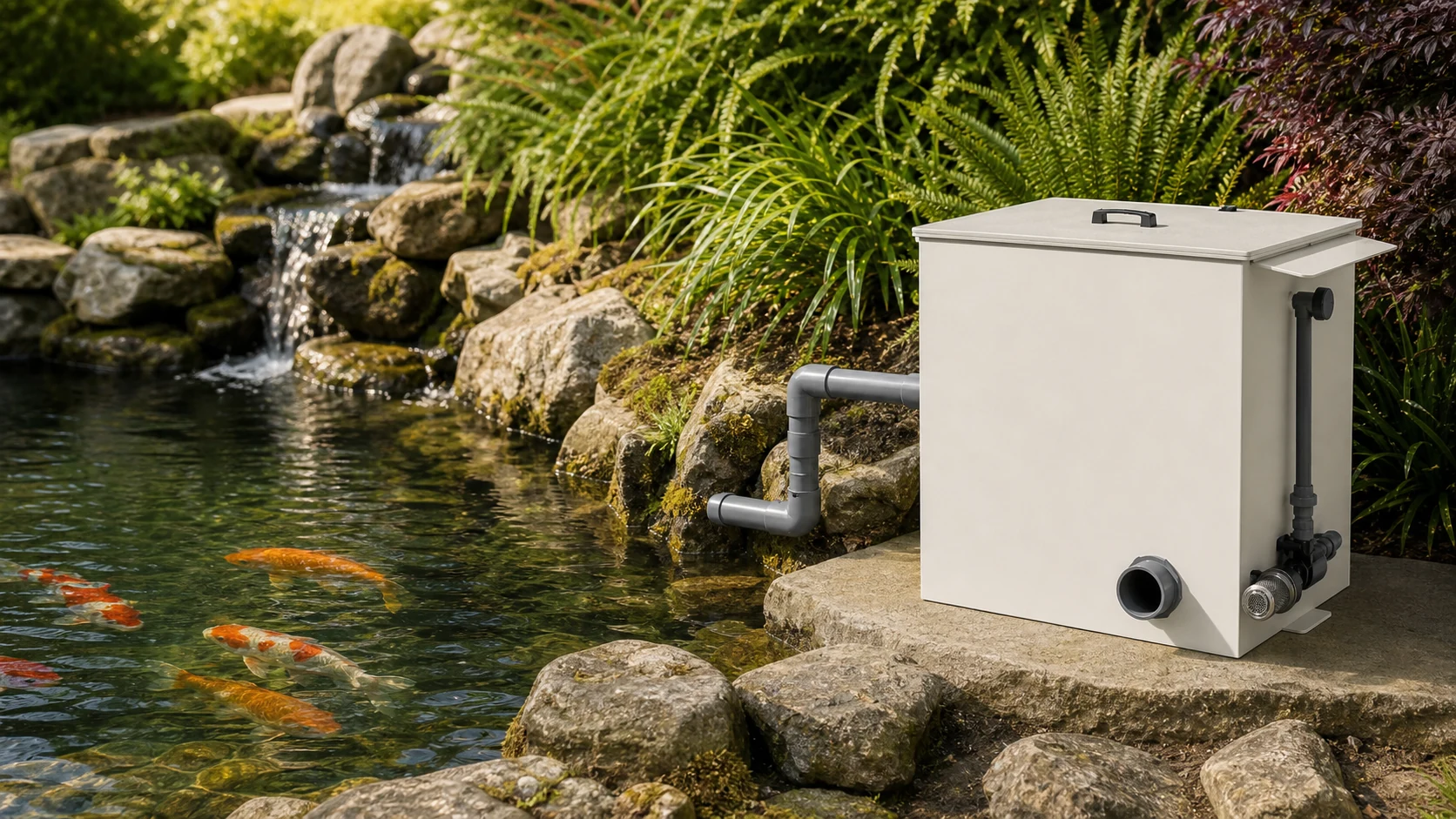
SYSTEM OVERVIEW
What Is a Pond Filtration System?
A pond filtration system is the connected treatment route that moves pond water through equipment for particle removal, biological treatment and circulation before returning it to the pond. Each stage addresses a different part of the water-quality load.
Mechanical filtration captures suspended solids such as fish waste, uneaten feed and fine debris. Biological filtration provides media and conditions for beneficial microorganisms that process dissolved nitrogen compounds. Circulation and optional clarification or disinfection equipment are selected around the actual pond and operating goal.
A drum filter is one mechanical component within this process. It does not replace the biological stage, correct hydraulic design or regular system checks. This distinction helps buyers compare equipment accurately instead of relying on a single product to perform every treatment function.
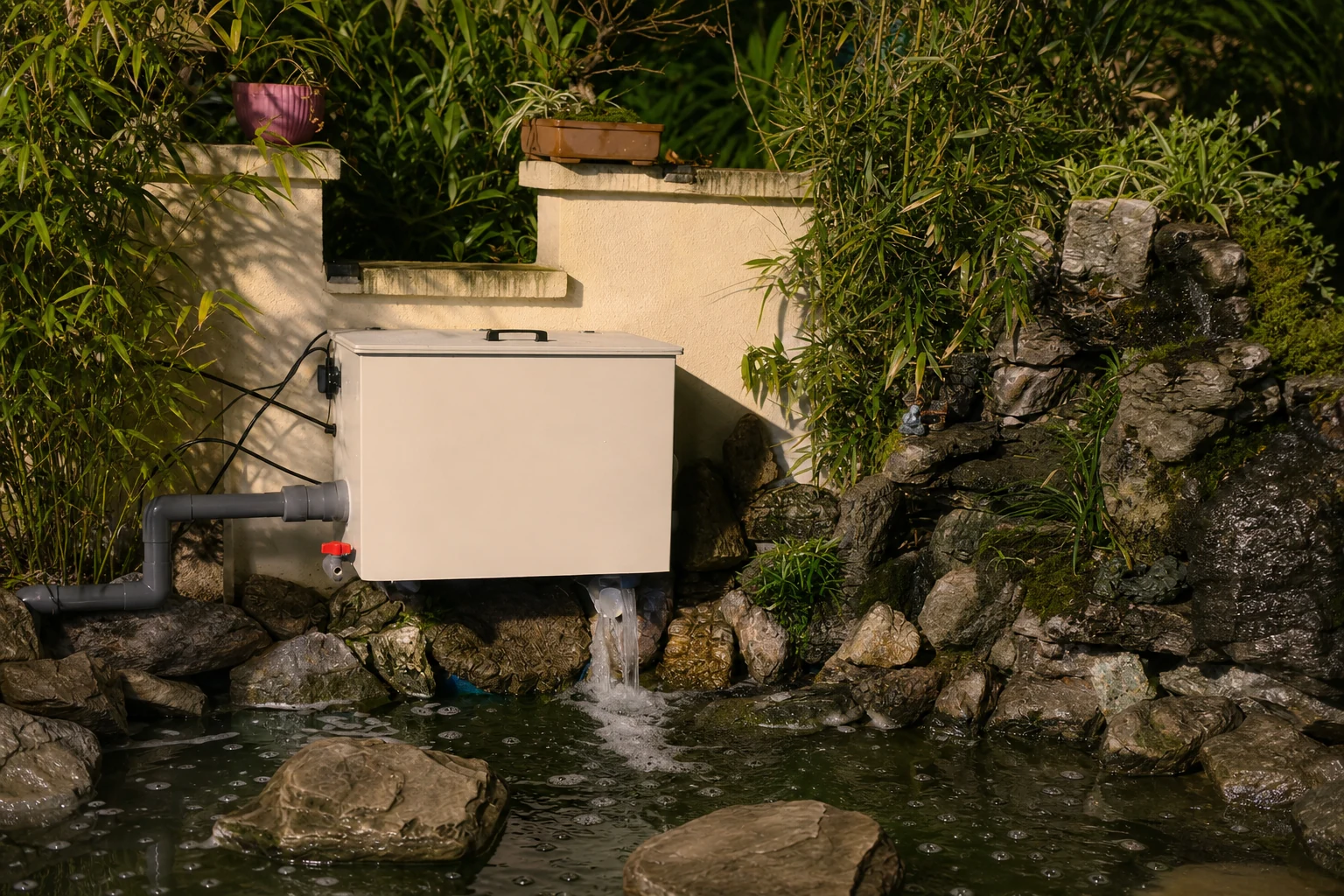
TREATMENT ROUTE
Complete Pond Filtration Process
Plan the treatment route as connected stages rather than isolated equipment. Removing solids before biological treatment can reduce the amount of captured waste that breaks down downstream, while stable circulation helps every stage receive the intended water flow.
1. Mechanical Filtration
Water first passes through equipment that separates suspended solids from the circulating flow. Automatic rotary drum filtration can reduce the frequency of manual screen cleaning while keeping the solids-removal stage in operation.
2. Biological Filtration
After solids removal, water moves through appropriately sized biological media. This downstream stage supports the conversion of ammonia and nitrite generated by fish metabolism and feeding.
3. Water Clarification
Circulation, settling control and optional UV or other clarification equipment may be used where the project requires them. The correct arrangement depends on water condition, fish load and the installation plan.
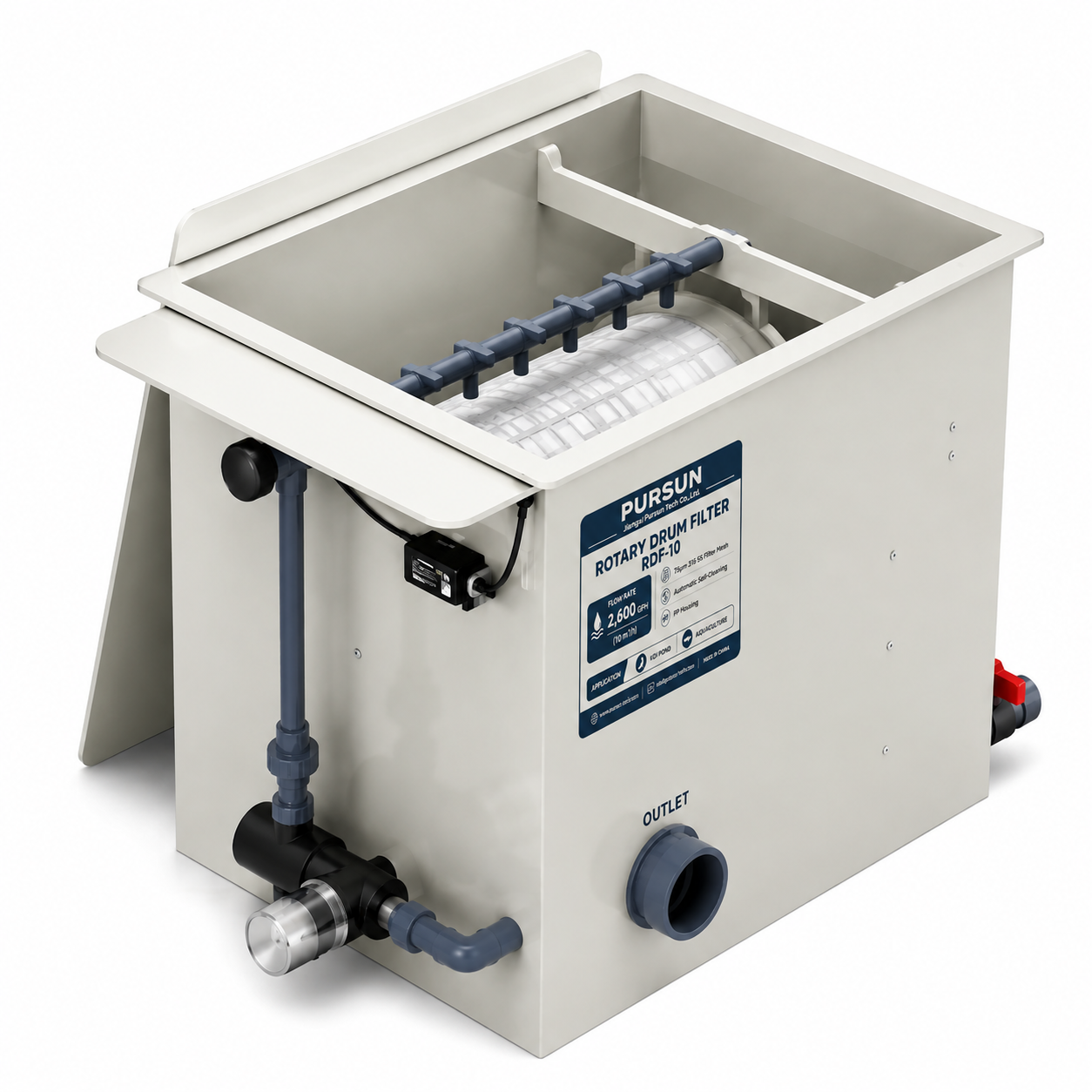
MECHANICAL FILTRATION
Why Use Drum Filter Technology?
A rotary drum filter continuously screens pond water through a rotating mesh surface. When the cleaning control is triggered, the drum rotates and spray nozzles remove retained particles toward the waste outlet. The process allows mechanical filtration to continue with less routine screen handling than a manually cleaned screen.
For pond buyers, the practical benefits are automatic cleaning, repeatable solids separation and a compact mechanical stage that can be connected before biological filtration. Actual filtration precision, flow capacity and cleaning configuration must be confirmed for the selected model.
Review Pursun’s automatic rotary drum filter range for product construction, model data and selection support.
BUYER GUIDANCE
Pond Size and Flow Selection Guide
The right pond filter system is selected from confirmed project data, not from pond appearance or a model name. Start with the complete water circuit and identify the flow that must pass through the mechanical stage during normal operation.
Pond Volume
Provide the total operating water volume, including connected chambers where relevant. Do not select a model from a model suffix alone.
Required Flow
Confirm the target turnover and the actual pump flow after pipe losses, elevation and system resistance. Engineering confirmation is required before order.
Fish and Feeding Load
Koi stocking, fish size, feeding level and seasonal debris affect solids loading and the work required from mechanical and biological stages.
Installation Condition
Share gravity-fed or pump-fed layout, operating water levels, pipe positions, waste discharge route, equipment-room space and maintenance clearance.
Before requesting a recommendation: prepare pond volume, desired turnover, pump model or measured flow, koi quantity, feeding level, installation drawing, inlet and return pipe sizes, available voltage and clear photos of the filtration area. This information supports a more useful technical review.
PURSUN SOLUTIONS
Pursun Pond Filtration Solutions
Choose the product route that matches the buyer’s application. The koi pond page focuses on residential pond requirements, while the drum filter product page provides the broader mechanical-filtration range and technical selection information.
Koi Pond Drum Filter
Automatic mechanical filtration positioned for backyard koi ponds, ornamental ponds and professional pond-building projects.
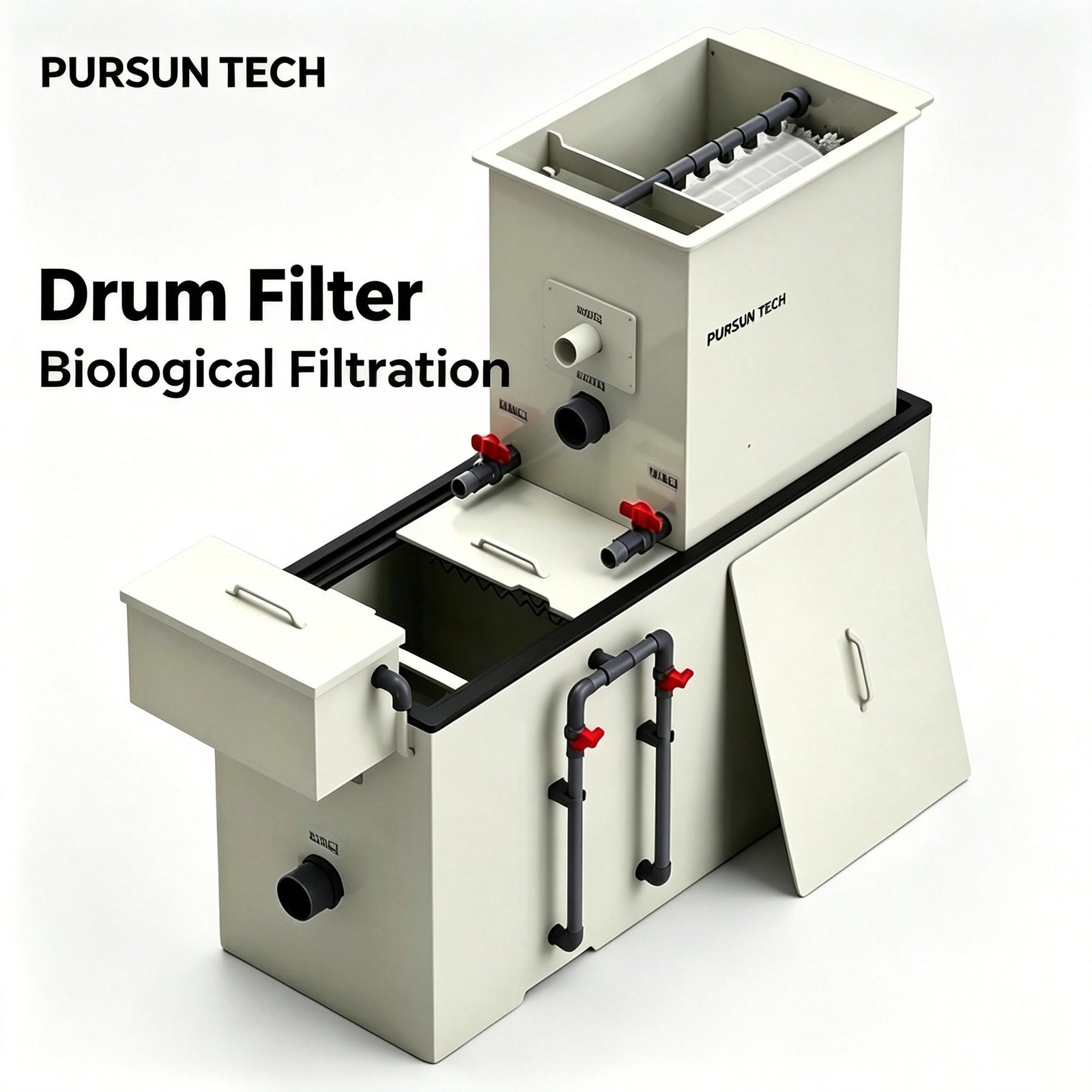
Rotary Drum Filter Product Range
Compare drum filter construction, working principle, verified model data and the information required before quotation.
BUYER QUESTIONS
Pond Filtration System FAQ
What equipment is included in a pond filtration system?
Does a drum filter replace biological filtration?
How do I choose the correct flow rate?
Can the system be used for both koi and garden ponds?
What information is needed for a quotation?
Need a Pond Filtration System Recommendation?
Send your pond volume, flow requirement, fish load and installation details. Pursun will review the information and recommend a suitable filtration route.